Embossing vs Spot UV: How to Choose the Best Premium Business Card Finish
16th Feb 2026
Embossed vs Spot UV Business Cards: Which Is Right for Your Brand?
When you’re investing in premium business cards, you’re not just choosing “a finish.” You’re choosing a signal. Texture, light, and tactile detail all tell people something before they even read your name. That’s why two of the most popular upgrades in high-end print—embossing and Spot UV—can feel similar at first, but actually communicate very different vibes in-hand.
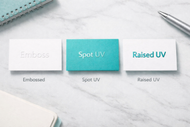
And here’s the twist most people don’t realize: there’s a third option that blends the best of both worlds—Raised Spot UV (3D Spot UV)—which can deliver a glossy, embossed-like raised effect without creating that “reverse impression” on the back of the card.
Let’s break it all down so you can pick the right finish for your brand, your design, and the way you want people to feel when they hold your card.
Quick Answer: Which One Should You Choose?
- Choose Embossing if you want classic, understated luxury and a tactile “crafted” feel (often best on uncoated or cotton stocks).
- Choose Spot UV if you want modern contrast—matte + gloss “pop”—and a finish that catches light instantly.
- Choose Raised Spot UV (3D UV) if you want a raised, premium feel like embossing, but with a glossy look and without the back-side reverse impression.
Explore: Embossed Business Cards | Spot UV Business Cards
What Embossing Really Does (and Why It Feels So Premium)
Embossing physically reshapes the paper by pressing it with a metal die, creating a raised element you can feel—logos, monograms, icons, even subtle typography. It’s a finish people associate with craftsmanship because the texture comes from the paper itself, not from a coating.
Why embossing works
- Classic luxury signal: refined, confident, and not flashy.
- “I care about details” energy: people feel it before they read it.
- Perfect for minimal designs: a simple mark becomes the hero.
The tradeoff: the “reverse impression”
Because embossing pushes the sheet upward, it can leave a reverse impression (a subtle deboss-like area) on the back side. On thicker stocks it can be reduced, but if you want a perfectly clean back for writing, appointment details, or a second design, it’s something to consider.
What Spot UV Does (and Why It Pops So Hard)
Spot UV is a clear, glossy coating applied only to specific areas of your card—your logo, pattern, headline, or design accents. It’s all about contrast: matte vs gloss, shadow vs shine, subtle vs bold.
Why Spot UV works
- Instant visual impact: it catches light and attention immediately.
- Modern + clean: especially powerful on matte/soft-touch finishes.
- Great for patterns and shapes: you can add “texture” without changing the paper.
The tradeoff: it’s primarily visual (unless you go raised)
Standard Spot UV has a slight feel, but the main effect is visual shine. If you want that stronger “raised” tactile hit, the upgrade you’re looking for is Raised Spot UV.
The Best-of-Both Option: Raised Spot UV (Gloss “Embossed” Look Without the Back Mark)
Raised Spot UV (often called 3D Spot UV or raised UV) builds a thicker clear layer on top of the printed surface. It creates a noticeably raised, dimensional feel—like embossing—while adding a glossy highlight that looks incredible in the light.
Why raised Spot UV is a smart alternative to embossing
- Raised tactile feel: you get real dimension you can feel.
- Glossy “embossed” effect: it looks like a sculpted shine.
- Cleaner backs: since you’re not physically pushing paper fibers through, you usually avoid the reverse impression embossing can create.
- Photographs well: great for social posts and product shots.
If your design goal is: “raised logo, premium feel, clean back side” — raised Spot UV is often the move.
Can You Combine Embossing + Spot UV?
Yes—and when done right, it’s one of the most high-end looks in print.
- Emboss the logo for a matte, sculpted, tactile centerpiece.
- Add Spot UV to a pattern, border, or secondary mark for contrast and light-catching detail.
This “texture + shine” pairing feels intentionally premium. It’s not loud—it’s designed.
How to Choose Based on Brand Personality
Pick embossing if your brand is…
- Minimalist (simple logo, strong typography, clean layout)
- Classic luxury (timeless, confident, understated)
- Craft-forward (designers, makers, boutique services)
Pick Spot UV if your brand is…
- Modern (clean lines, high contrast, contemporary vibe)
- Bold (patterns, geometric elements, sharp branding)
- Visual-first (brands that want instant “wow” on first glance)
Pick raised Spot UV if your brand is…
- Premium but practical (you want tactile + clean backs)
- Detail-obsessed (logo highlight as the hero)
- Social-friendly (you want a finish that looks insane in photos)
Design Tips That Make These Finishes Look Expensive
- Less area, more intention: small embossed or raised UV hits feel luxe. Huge coverage can look heavy.
- Use contrast: matte base + gloss accent = instant premium.
- Keep type readable: ultra-thin lines can be risky depending on stock and artwork.
- Give it breathing room: negative space is part of the luxury look.
- Pair with other upgrades (optional): foil accents, die-cut shapes, painted edges, and ultra-thick stocks can take it even further—but you don’t need all of them at once.
FAQ: Embossed vs Spot UV Business Cards
Does embossing always leave a mark on the back?
Embossing often creates a subtle reverse impression on the back because the paper is physically pressed. Thicker stocks can reduce it, but if you need a perfectly clean back, consider raised Spot UV as an alternative.
What’s the difference between Spot UV and raised Spot UV?
Spot UV is primarily a glossy highlight. Raised Spot UV builds thickness for a more dimensional feel you can clearly feel with your fingers.
Which one looks more “luxury”?
Both can look luxury—just different styles. Embossing is classic and understated. Spot UV is modern and high-contrast. Raised Spot UV is a premium hybrid: tactile + glossy.
Can I do Spot UV on matte cards?
Yes—matte + Spot UV is one of the best combinations because the contrast makes the glossy elements pop.
Which is better for a minimalist logo?
Embossing or raised Spot UV. If you want a clean back with no impression showing, raised Spot UV is often the better pick.
Ready to Choose Your Finish?
If you want the most “premium in-hand” impact, start with the finish that matches your brand personality—and then let the design do the talking.
Explore: Embossed Business Cards | Spot UV Business Cards
And if you’re trying to decide between classic texture vs modern shine, remember: you can always go hybrid—or choose raised Spot UV for that glossy embossed look with a cleaner back side.